Android XR is Linux underneath. That is not the same as open
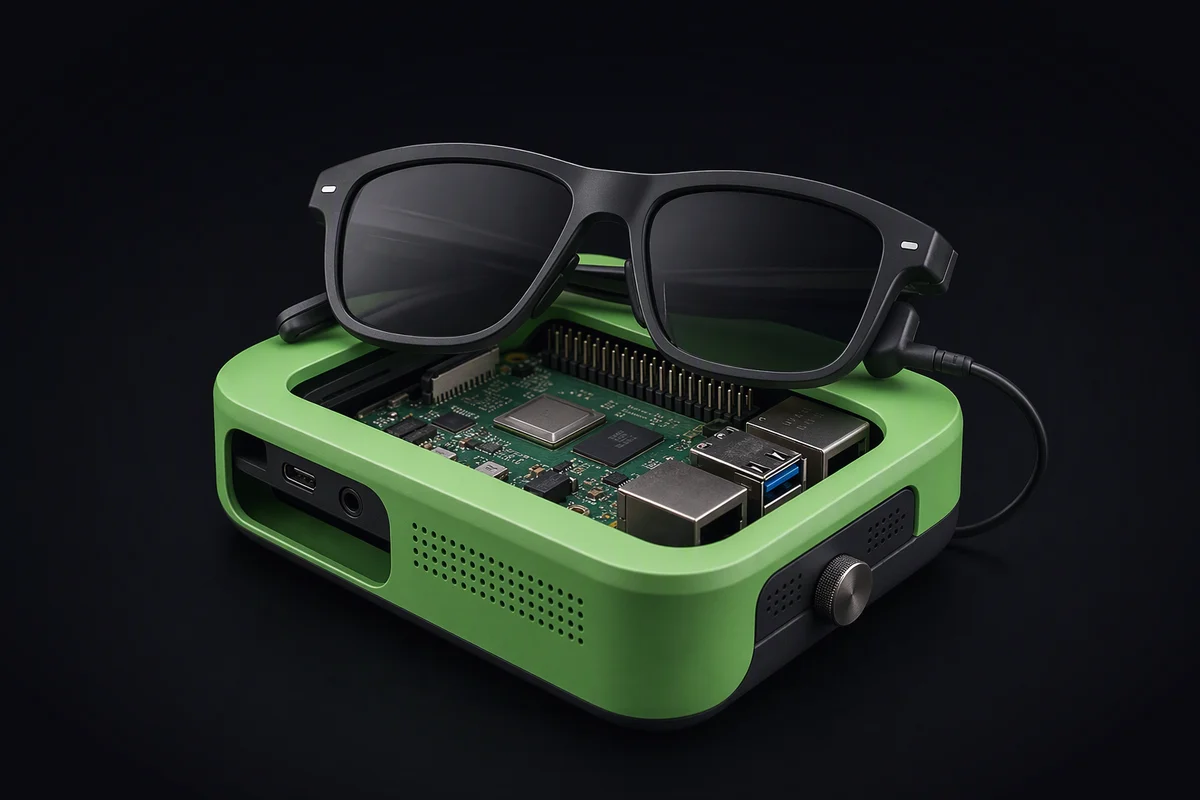
Someone in a team chat posts the news that XREAL Aura is the first priced pair of display glasses on Android XR, and someone else replies: “Android is Linux, so it is basically open.” Half of that sentence is right. Android, and so Android XR, runs on the Linux kernel. The other half is where the trouble starts.
Android XR is Google’s platform for XR devices: headsets, glasses with a display and audio glasses, built with Samsung and Qualcomm, with Gemini as the assistant layer. The first device was Samsung’s Galaxy XR headset in October 2025. At Google I/O in May 2026 Google showed glasses with frames from Warby Parker and Gentle Monster, and Samsung has announced its own Gemini glasses for November 2026. A great deal of hardware is about to run this platform. The kernel under it is Linux. That tells you less than it seems to.
The real cause: the kernel is one layer of many
A kernel schedules processes, manages memory and talks to hardware. It does not decide which apps you may install, what the assistant remembers, where a camera frame is sent or when the system updates. Those decisions live in the layers above: the system image, the platform services, the assistant, the store and the cloud behind them. Parts of that platform and Google’s services are not open in the sense that a system you can read and build is open. A Linux kernel at the bottom does not change who controls the rest.
Where “it is Linux” misleads
The kernel is the smallest part of what you trust. If an assistant sees through your glasses, the code that matters most is the code that handles the camera stream, the memory and the actions taken on your behalf. None of that is the kernel.
The assistant is built into the system. On Android XR, Gemini is not an app among others; it is the layer that understands what you look at, opens apps and moves through the interface. Whose assistant that is, and what it means to have it in the system, is the subject of KyberBot’s piece on Android XR.
The glasses may not be the computer. For glasses, the Android XR SDK offers Jetpack Projected: the app runs on a host device, such as a phone, and projects its experience to the glasses. On audio glasses, Google describes Gemini doing multi-step tasks on the phone in the background, with the glasses as its voice and camera. What runs where depends on a chain of devices and platforms, not on one kernel.
Context the platform holds. The SDK includes a Device Availability API that tells an app whether the device is being worn. It is a small, sensible feature. It is also a reminder that the platform knows when the glasses are on your face, and the platform, not the kernel, decides what is done with that.
Where the work is done is not stated. Google has not published how much of the assistant’s work happens on the device, on the phone or in the cloud, and we will not guess. The kernel cannot tell you either.
What KyberLinux is built to be instead
KyberLinux treats the whole stack as the system, not just the kernel, and keeps it open in the sense that matters: you can read it, build it and verify that what runs is what you built.
One system, every layer readable. The image definition is public, from the kernel to the services that run on top. The same system is meant to run on a wrist unit, a robot and a rack server, as described in one system from the wrist to the rack.
The assistant inside the walls, not above them. KyberBot and the agents it hands work to run under the same rules as everything else: each agent in its own KyberCell, network closed by default, every step logged. How multi-step work in the background compares with that is taken up on KyberAgent.
Hardware you can reflash. The body matters as much as the system. Whose system rules the body of an assistant is the question KyberDeck asks about Android XR, and building on any platform with a way out is what KYBERTIS writes about.
KyberLinux does not integrate with Android XR. It is a different answer to the same question, not a layer for that platform.
The honest limits
KyberLinux is pre-launch, with nothing to install, and no glasses have been tested with it. An open system does not make a device open by itself: firmware, radios and the chips around them have their own code, and an open operating system cannot close a hole in closed firmware from above. Android XR, meanwhile, has strengths we do not have: a store, an SDK with an emulator for glasses, and hardware already announced. The first priced glasses on the platform do not ship to Poland or the rest of the EU in their first wave; the maker names 2027 for other markets.
A test you can run today
You can see the Linux underneath any Android device in a minute. Turn on USB debugging on a phone and run adb shell cat /proc/version. That line is the kernel. If you build for glasses, the Android XR emulator in Android Studio gives you a device to try the same on.
Then draw five rows on a page: kernel, system image, platform services, assistant, store. For each row answer three questions:
- Can I read the code that runs on my device, for this exact version?
- Can I build it myself and get the same result?
- Can I install my own build and still use the device fully?
Count the rows where all three answers are yes. On a typical phone, expect few of them, if any. That count, not the word Linux, is how open the system is.
- Android XR
- Linux
- open source
- glasses
- KyberCell